
Last updated August 25, 2026
Free on-site gate assessment - hinges, posts, and your LiftMaster or Nice gate operator checked before anything is quoted
The assessment is free and the quote is the invoice.
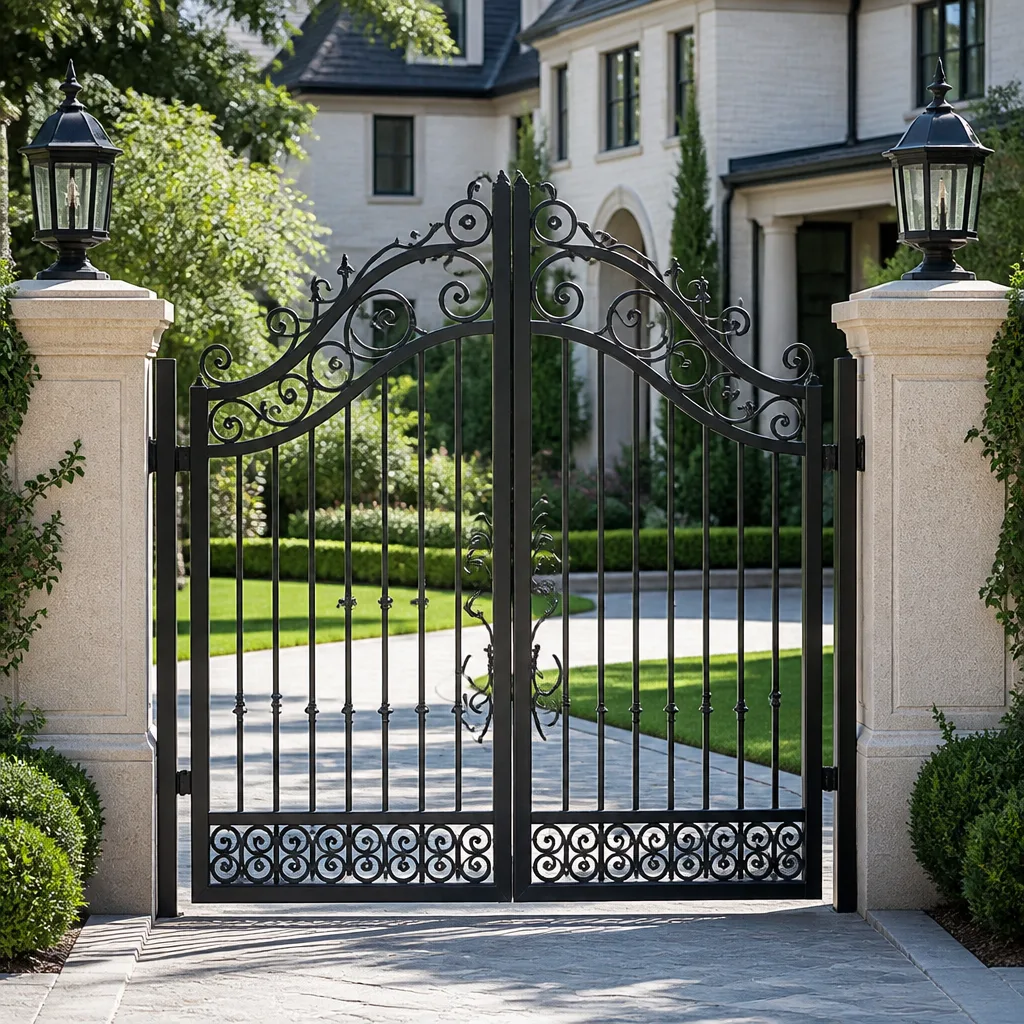
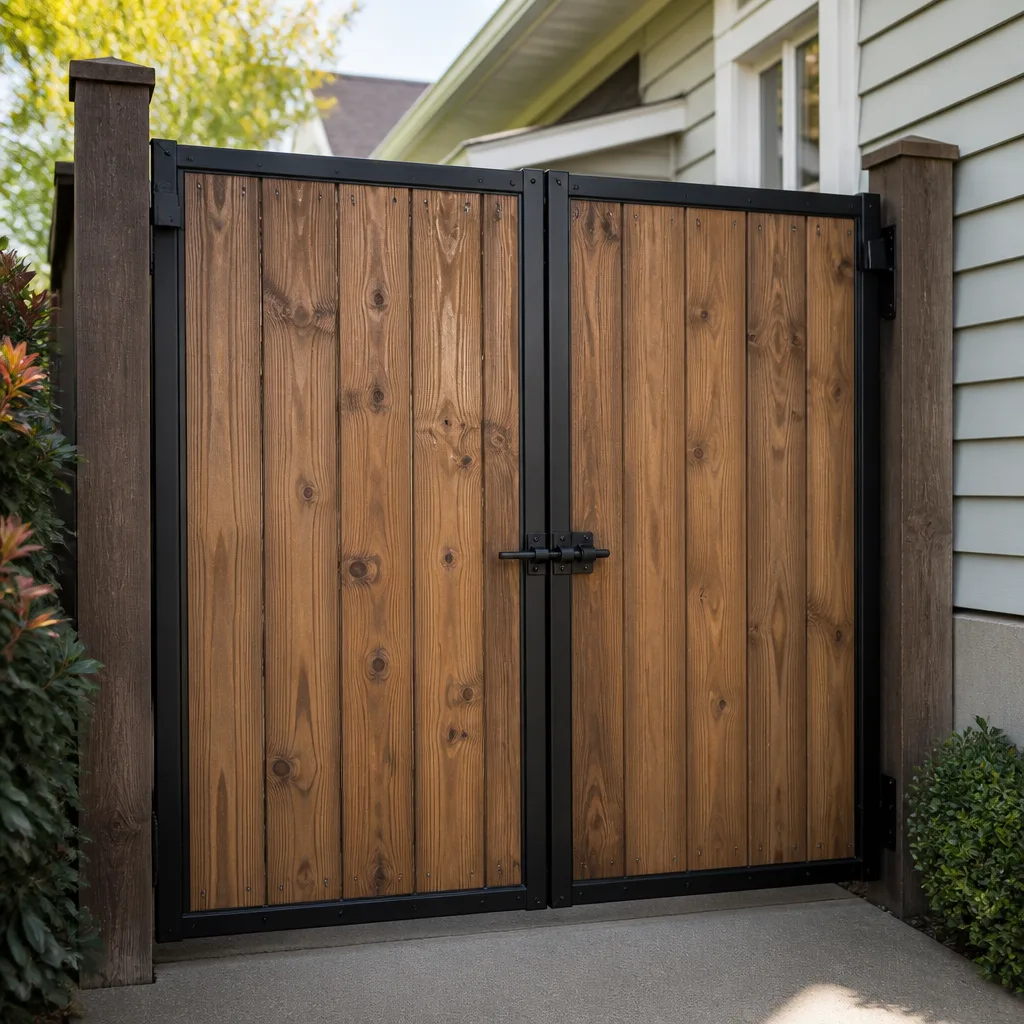
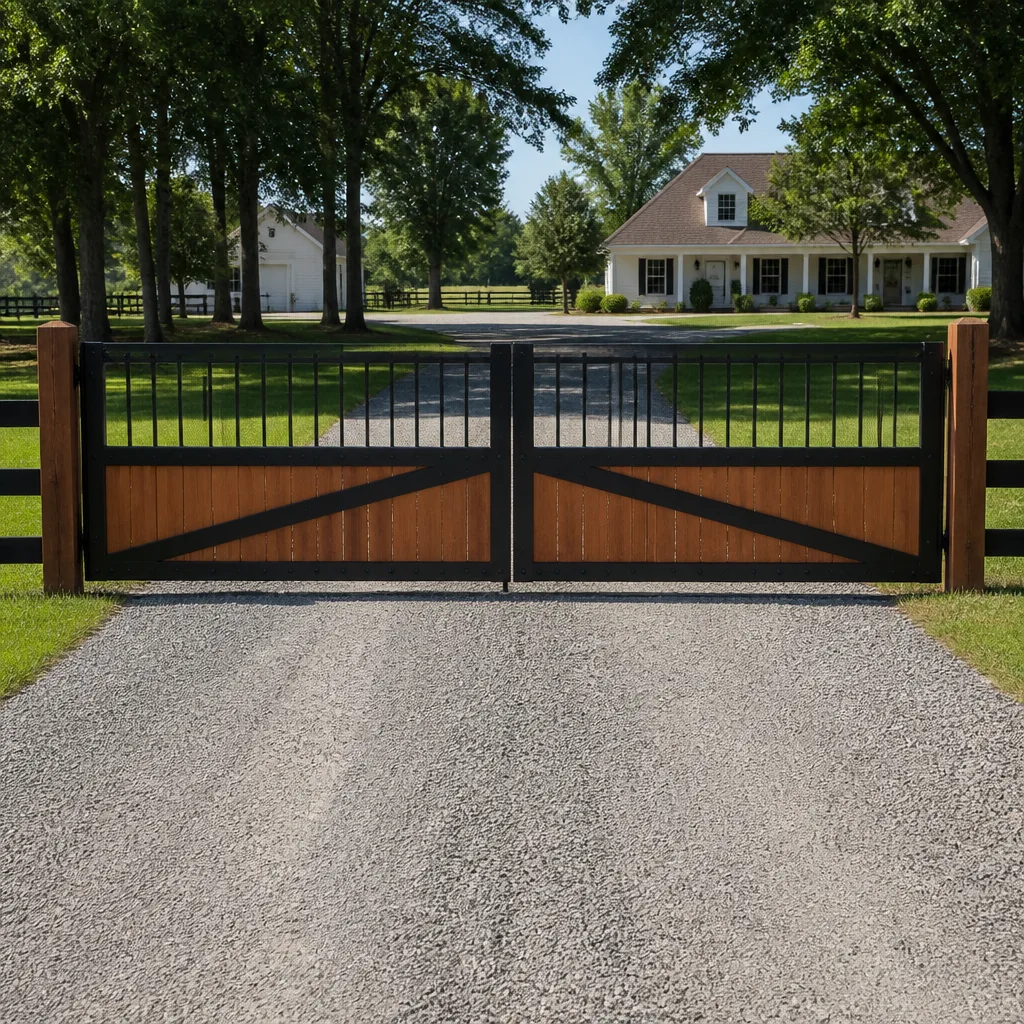
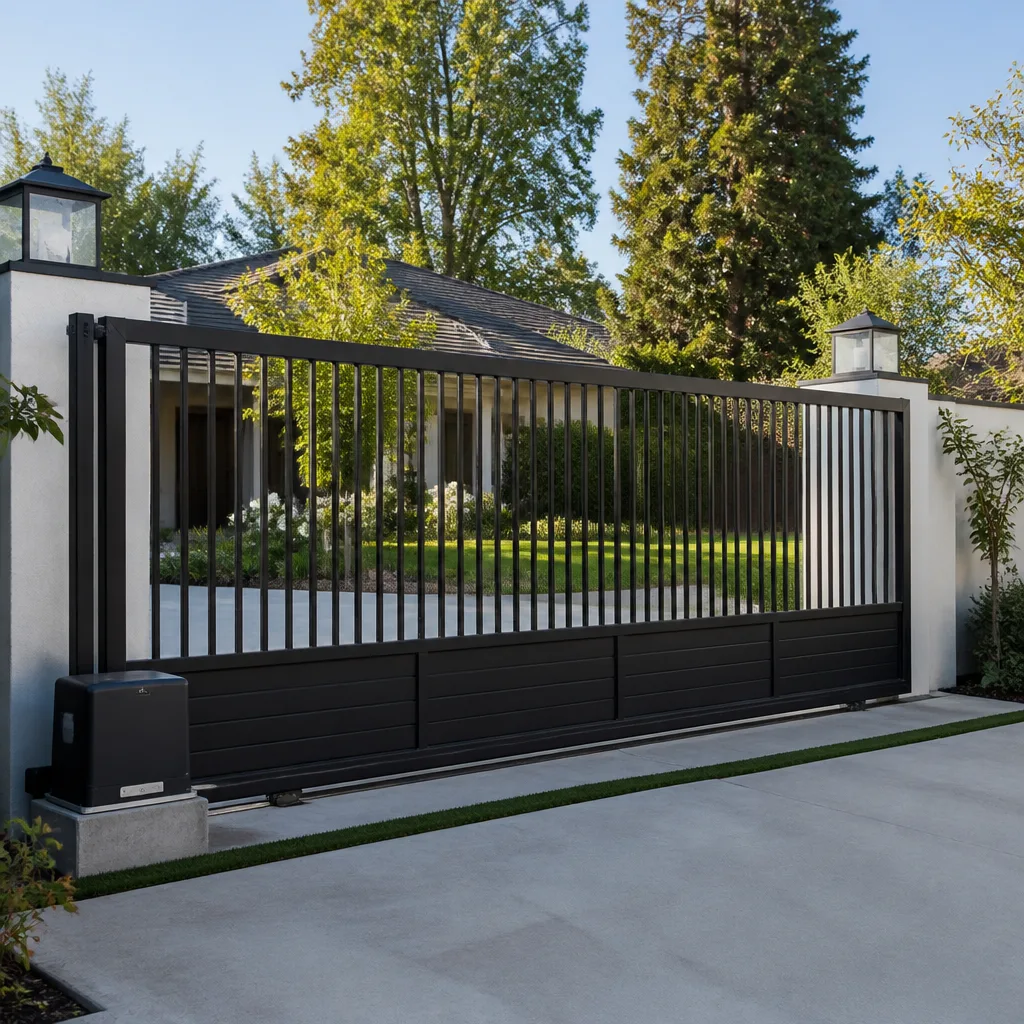
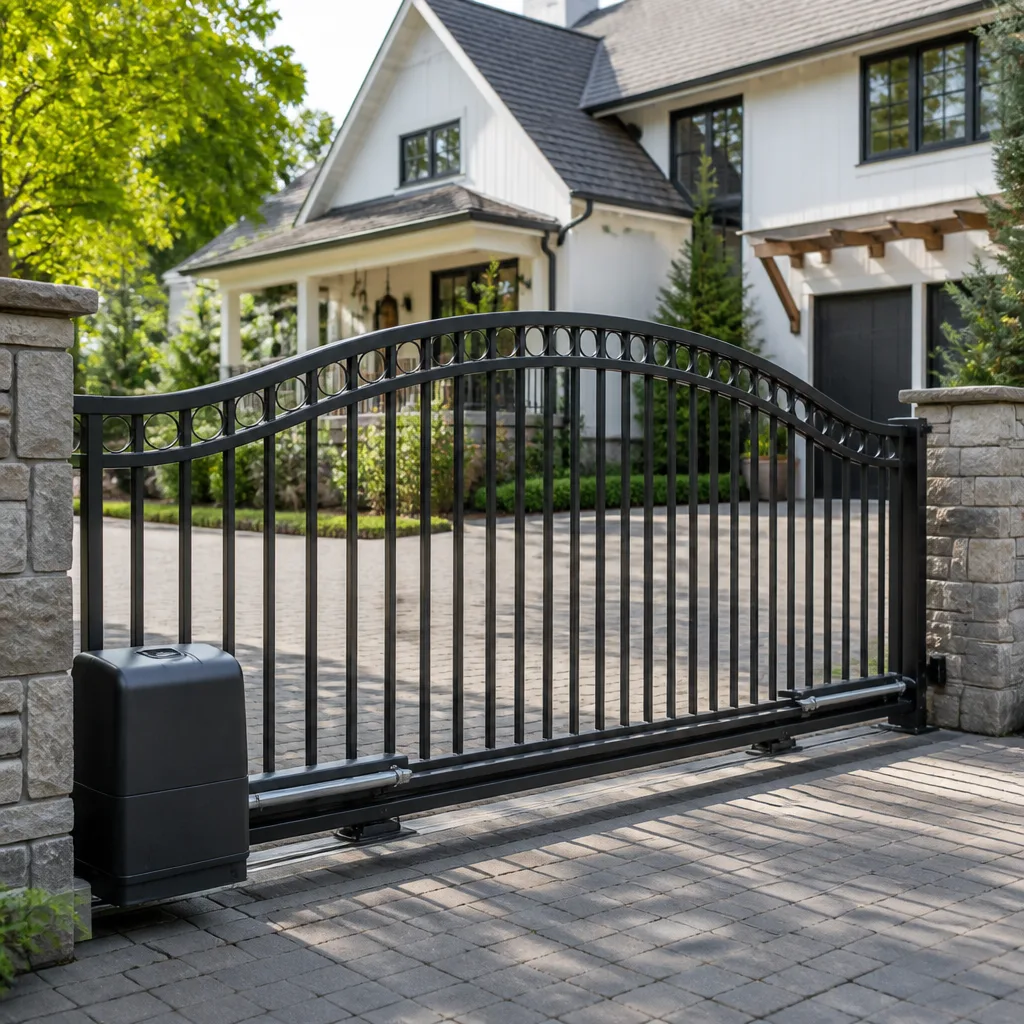
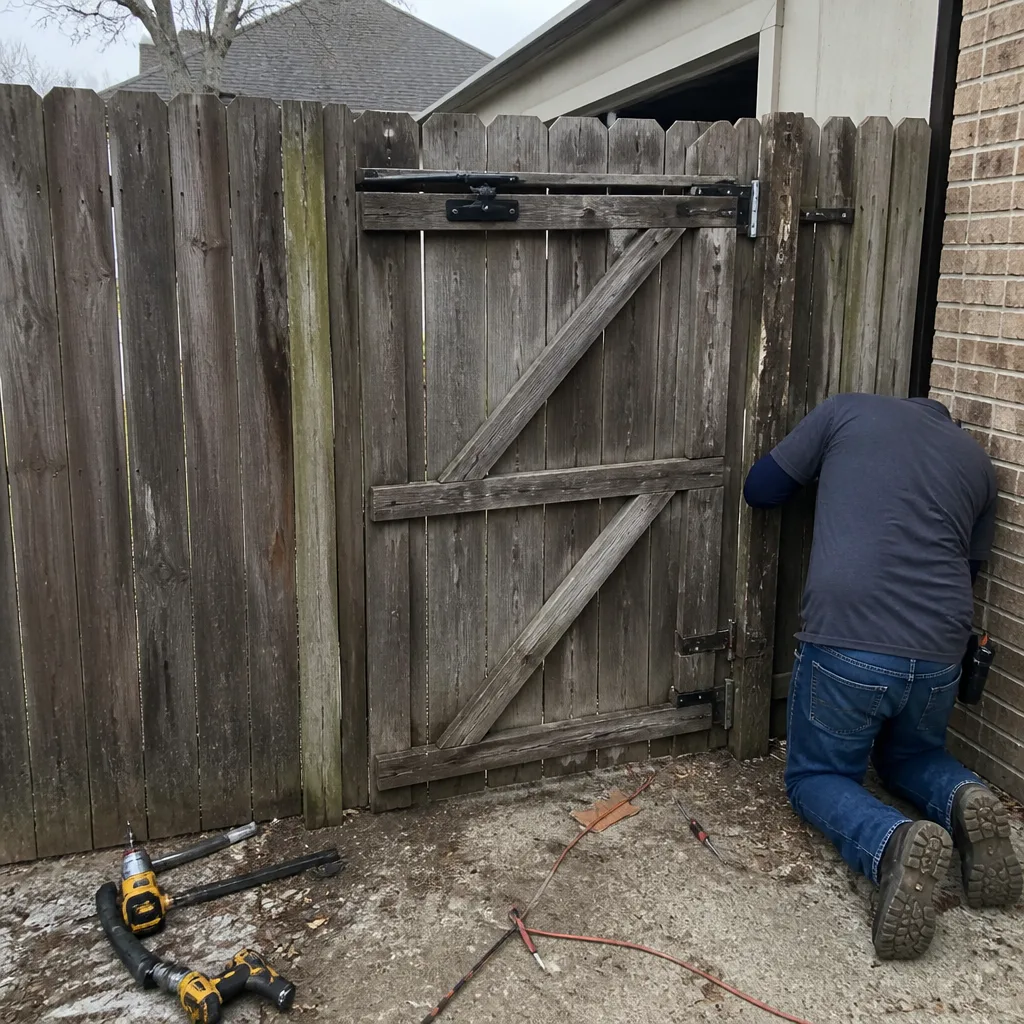 Before
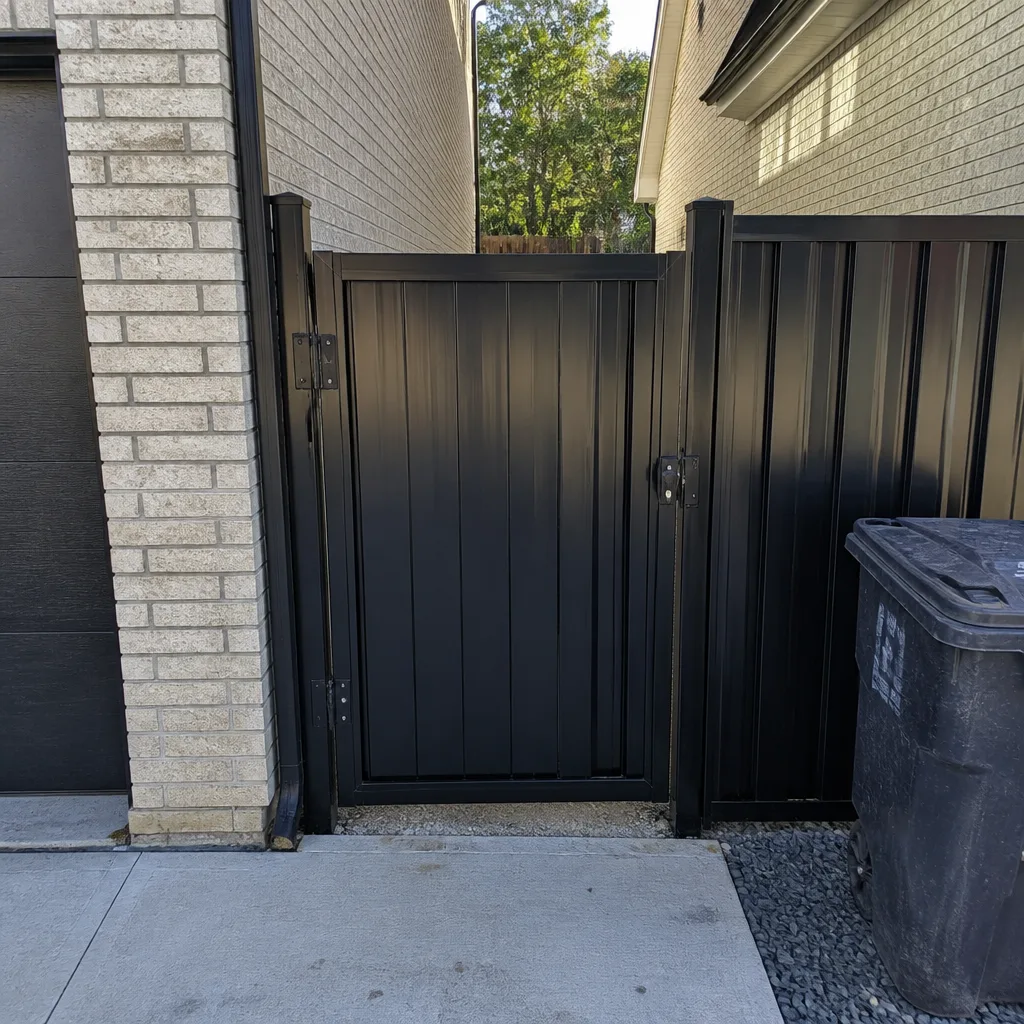 After
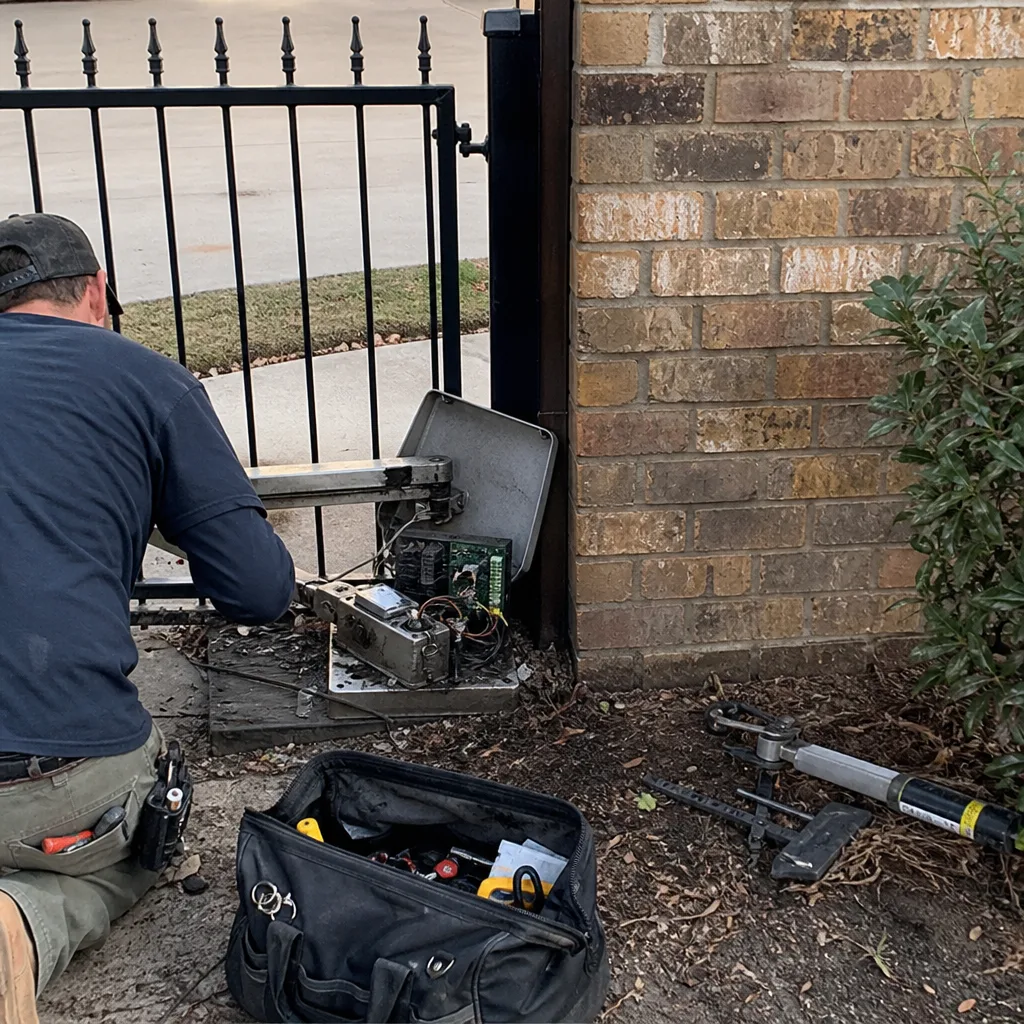 Before
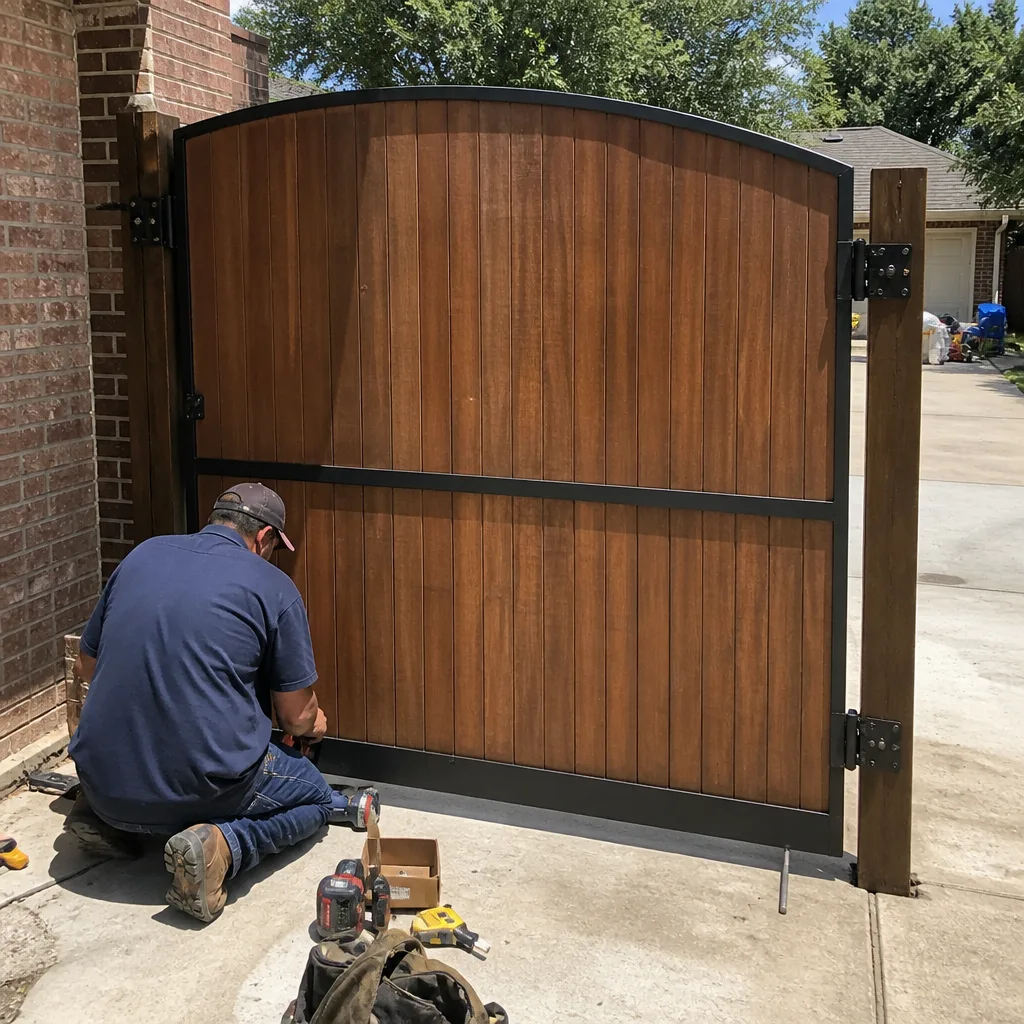 After
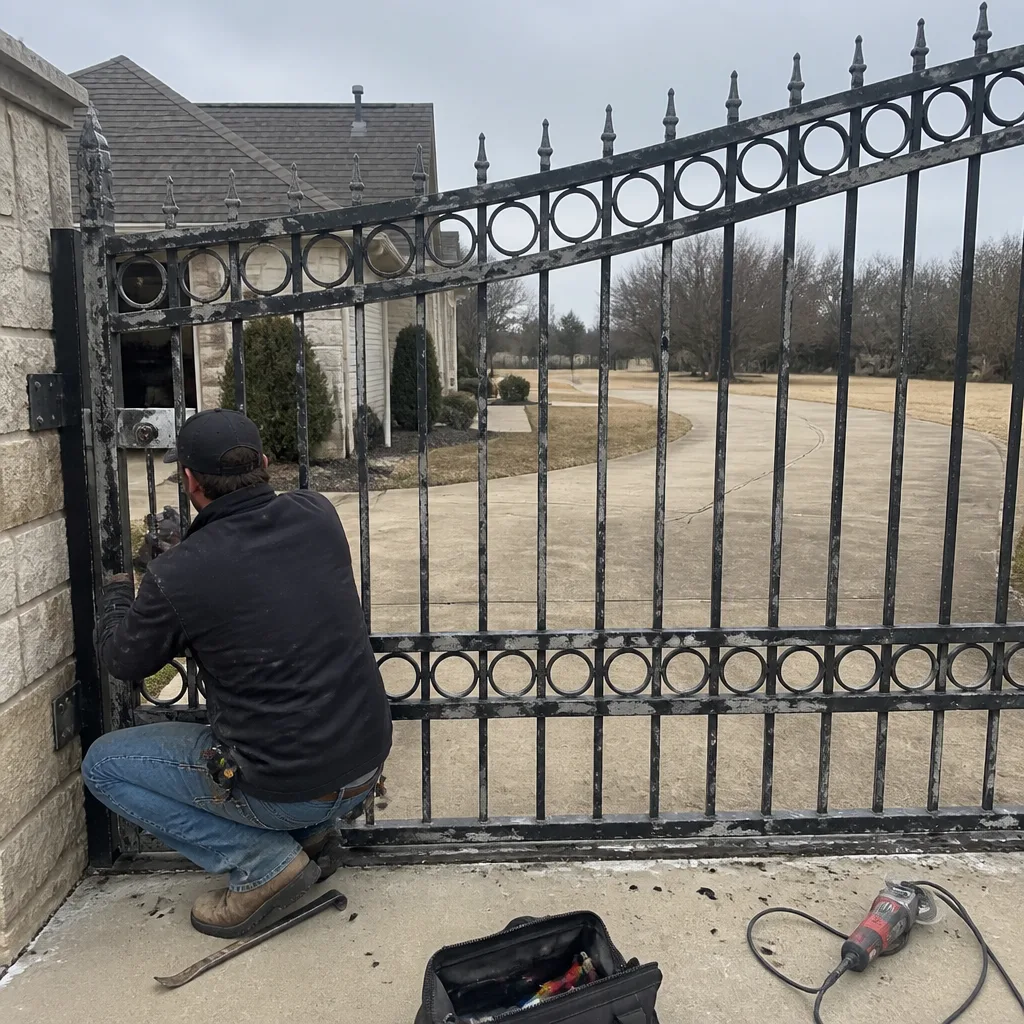 Before
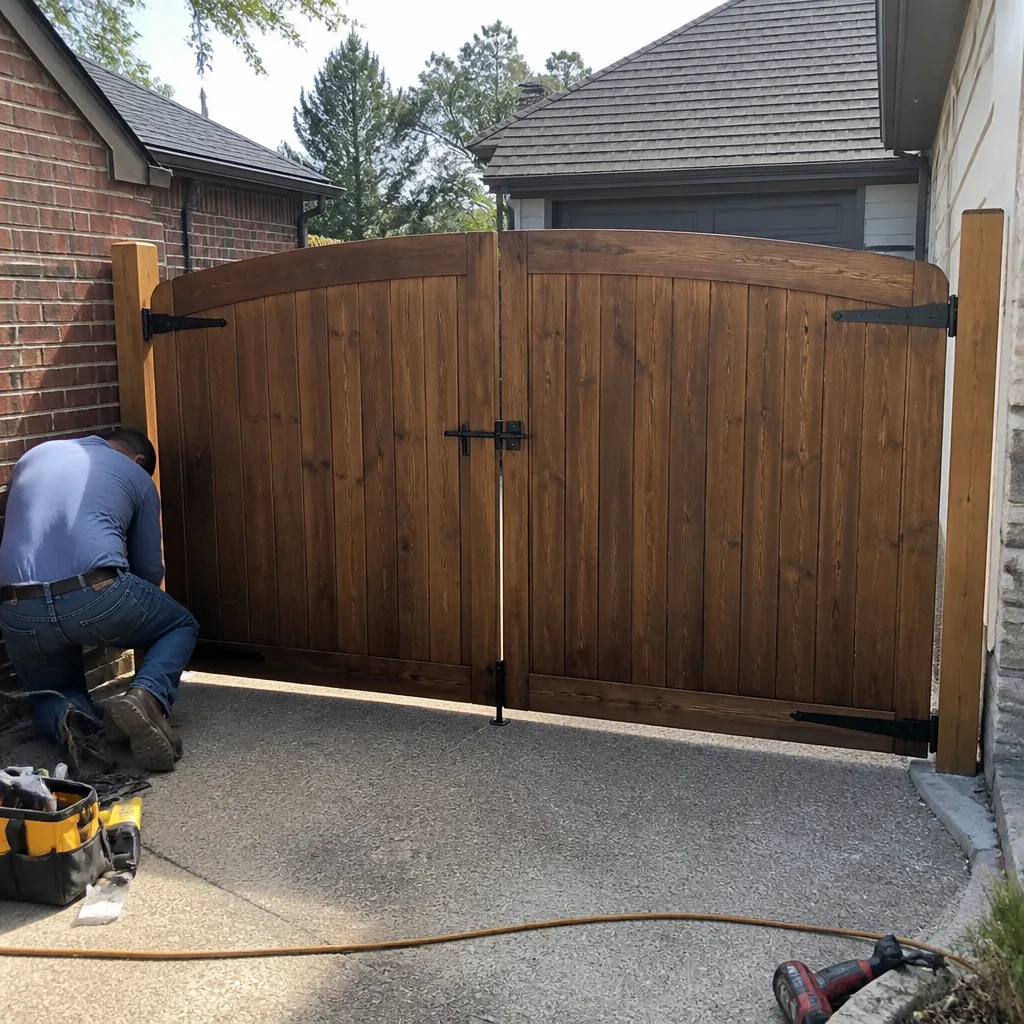 After
Gate Repair Warning Signs: A Wylie Homeowner’s Reference Guide
Most gate failures in Wylie don’t announce themselves with a crash. They whisper for months first: a hinge that groans a half-second longer, a motor that pauses before reversing, a sag you can measure with a level but keep ignoring. By the time a gate stops opening altogether, the repair bill is usually three to five times what it would have been if caught early. This guide walks you through the warning signs we’ve tracked across hundreds of driveway gates in Wylie over the last four decades, what each sign actually means, and which ones demand a call today rather than next week. You’ll learn how to read your gate the way a technician does, hear the noise means something, and know precisely when a small fix stops being small.
Quick Answer
The clearest warning signs that a Wylie gate needs repair are: visible sagging or dragging, grinding or screeching during operation, slow or jerky movement, the gate reversing before fully closing, rust or cracked welds at the hinges, a motor that runs but won’t move the gate, and remote or keypad systems that work intermittently. Any one of these means the gate is working harder than it should, and that extra work becomes a full failure sooner than most homeowners expect. If your gate shows two or more of these signs, schedule service before it stops working entirely.
Table of Contents
- Sagging or Dragging: The Geometry Problem
- Noises That Mean Something: Grinding, Screeching, and Clanking
- Slow or Jerky Movement: Motor Strain and What It Costs
- The Gate That Reverses for No Reason
- Rust, Cracks, and Welds: The Structural Warning Signs
- Motor Runs But Gate Doesn’t Move
- Remote and Keypad Systems Acting Up
- Power Problems: The Electrical Side of Gate Failure
Sagging or Dragging: The Geometry Problem
A gate that sags is a gate that has already begun to fail, even if it still opens and closes. The most common cause in Wylie is hinge wear. Our clay-heavy soil shifts with drought and rain cycles, and posts set years ago can tilt a few degrees without anyone noticing. That tilt transfers the gate’s entire weight onto the hinge bolts, which then oval out their holes. Once those holes elongate, the gate drops. You’ll see it as a wider gap at the top latch side or hear it as a scrape against the driveway near the latch post.
The fix depends on when you catch it. Caught early, a hinge replacement and a re-hang solves it in one visit. Caught late, after the gate has been dragging for months, you’re often looking at weld repairs where the frame has cracked from the repeated stress, and sometimes a new post set in concrete if the original has moved too far out of plumb. A gate that drags across the concrete is also grinding away its own bottom rail. We’ve replaced bottom rails in Wylie where the steel had worn paper-thin at the contact point. That is a repair that never needed to happen.
How to Check for Gate Sag
- Stand at the latch post and sight down the top rail. It should read as one straight line, not a shallow V or a curve.
- Open the gate halfway and let go. If it swings on its own, the hinges or post are out of level.
- Look at the gap between the gate and the latch post. Equal top to bottom means the gate is hanging true. A wedge-shaped gap means sag.
- Check the ground clearance. A gate that started with two inches of clearance and now clips the driveway has dropped at least that much.
Noises That Mean Something: Grinding, Screeching, and Clanking
Gates make noise when metal touches metal without lubrication, when bearings wear out, or when moving parts have shifted out of alignment. Wylie’s summer heat bakes grease out of hinge pins faster than most homeowners expect. By August, a hinge that was lubricated in March can be dry enough to screech. The sound itself is not the problem. The problem is what the friction is doing to the parts.
A grinding noise from the motor usually means the internal gears are worn or the drive chain has stretched. A screech from the hinge means metal-on-metal contact and accelerated wear. A clank when the gate starts moving often points to a loose chain, a worn sprocket, or a gate that has moved on its hinges. None of these noises go away on their own. They either stay and get worse, or they stop suddenly when the part gives out completely.
- Screech at the hinge: Dry or worn hinge pin. Lubrication may buy time; replacement fixes it.
- Grind at the motor: Worn gears or chain inside the operator. Needs service before the motor binds.
- Clank on start or stop: Loose chain, worn sprocket, or shifting hinge assembly.
- Rattle while moving: Loose bolts, worn rollers, or a track that has shifted out of square.
If the noise is new, note when it happens: on opening only, closing only, or both. That detail tells a technician more than a video will. And don’t wait until the noise becomes a failure. We’ve never once arrived at a silent gate in Wylie and heard the homeowner say, “It was always quiet.” The noise came first.
Slow or Jerky Movement: Motor Strain and What It Costs
A gate that has run the same speed for fifteen years and then starts moving slower is telling you the motor is working harder than it used to. That extra work comes from somewhere: hinge wear, a shifting post, debris in the track, a low battery on a solar system, or a failing capacitor inside the operator. On a swing gate, the weight of the gate itself can change if water has gotten inside the frame and rust is adding pounds you can’t see.
Jerky movement, where the gate moves in small stutters rather than one smooth sweep, points to a different set of problems. Most often it’s the chain or belt slipping, a limit switch that’s fighting itself, or a gear that has lost teeth. On LiftMaster and FAAC operators, which are common in Wylie driveways, jerky movement frequently traces back to a worn drive gear or a capacitor that can no longer deliver a clean start.
The cost question matters here. A motor that strains for six months before failing often damages its own internal components in the process. What started as a capacitor replacement becomes a full operator replacement. In Wylie’s market, a new gate operator installed typically runs $1,100 to $3,600 depending on the gate’s weight, length, and whether you’re replacing like-for-like or upgrading to a heavier-duty unit. A capacitor is a fraction of that. The sign was there.
The Gate That Reverses for No Reason
Modern gate operators have safety systems designed to reverse when the gate meets resistance. That’s a feature, not a flaw, and it’s protected lives on driveways across Wylie for decades. But when a gate reverses with nothing in its path, something is triggering the safety system falsely, or the operator itself is misreading the load.
The usual culprits, in the order we check them:
- Obstruction sensors out of alignment. A photo eye that’s been bumped by a mower or knocked by a trash bin sees an obstacle that isn’t there.
- Excessive resistance in the gate’s travel. Slightly worn hinges or a sagging gate increase the force needed to move it. The operator senses that extra load and reverses, interpreting it as an obstruction.
- Worn limit switches. These tell the operator where the full-open and full-closed positions are. When they drift or fail, the operator can’t tell where the gate is and reverses as a safety default.
- Battery or power fluctuation on solar systems. A battery that can’t hold a full charge delivers inconsistent power, which can cause mid-travel reversals on BFT and other solar-capable operators common in the larger lots east of Wylie.
A gate that reverses randomly is not just an inconvenience. It’s a safety system in a degraded state, and that means the safety system itself may not function correctly when it’s actually needed. This is a call-today repair, not a wait-and-see one.
Rust, Cracks, and Welds: The Structural Warning Signs
Steel gates in North Texas live hard. Wylie’s summer heat and spring storms, combined with irrigation overspray and occasional hail, put constant stress on paint and powder coat. Once the coating is compromised, rust starts. Surface rust is cosmetic and treatable. Rust that flakes, pits, or shows through from inside the tube means the steel is losing thickness. That’s structural.
Cracks appear most often at welded joints: where the pickets meet the frame, where hinges attach to the gate, and where the operator bracket bolts on. Those are the highest-stress points on any gate, and a crack there means the weld has exceeded its fatigue limit. A cracked weld won’t heal itself. It will grow, and when it lets go, the gate doesn’t sag gracefully. It drops, twists, and usually takes the operator or the post with it.
In Wylie, irrigation overspray is a rust accelerator we see constantly. The same sprinkler system that keeps the St. Augustine green is misting the gate’s bottom rail twice a day. That constant wet-dry cycle strips protection and invites corrosion exactly where the gate’s weight concentrates. If your gate sits anywhere near a sprinkler arc, check the bottom rail and hinge plates every spring.
Motor Runs But Gate Doesn’t Move
This is the symptom that puzzles homeowners most. The operator hums, clicks, or whirs like it always has, but the gate itself sits still. It’s also one of the most diagnosable failures, and the cause is almost always mechanical rather than a dead motor.
- Chain has jumped the sprocket. The motor turns, the chain no longer drives the gate. Fixed by re-seating or replacing the chain and checking sprocket wear.
- Drive gear stripped. Plastic gears inside many residential operators are designed to fail before the motor does. When the teeth shear, the motor spins freely. A new gear kit fixes it, provided the gear wasn’t the symptom of a heavier problem.
- Clutch slipping. Some operators have an adjustable friction clutch. When it wears or loosens, the motor runs but the drive wheel slips against the gate. Tightening is a temporary fix; replacement is the real one.
- Broken linkage or weld at the operator bracket. The arm that connects the operator to the gate has come loose or sheared. The motor works, the connection doesn’t.
- Solenoid failure on magnetic locks. Less common on residential gates, but we’ve seen it on estate properties around Lake Lavon where magnetic locks are paired with operators.
If the motor runs and the gate doesn’t move, turn the operator off at the breaker or the power switch. A running motor with a failed drive system is still consuming power and, in some cases, building up heat. Then call a technician who works on your specific operator brand. We service Linear, Viking, and LiftMaster operators in Wylie regularly, which matters because a FAAC tech’s parts kit may not include the gear or chain for a BFT, and vice versa.
Remote and Keypad Systems Acting Up
Intermittent remote and keypad problems are the most frustrating gate failures because they seem to come and go. One day the remote works from the street. The next, you’re holding it against the windshield and nothing. That inconsistency is usually not the remote itself. It’s interference, power, or a receiver aging out.
Wylie’s growth has brought new cell towers and more wireless traffic, and older remotes operating on fixed frequencies can be stepped on by newer signals. A remote that worked reliably when you bought the house in 2004 may be fighting a crowded frequency band today. The fix is often a new receiver with rolling-code technology, which also gives you better security than the fixed-code systems of twenty years ago.
Keypad failures usually trace to three things: weather ingress, worn buttons, or a control board that’s no longer responding reliably. Wylie’s afternoon thunderstorms put keypads through genuine outdoor exposure, and a keypad that has been outside for ten years has earned its replacement. The good news is that keypad and receiver work is typically less expensive than the mechanical repairs above, and most of it can be handled in a single visit.
Power Problems: The Electrical Side of Gate Failure
Gate operators are electrical devices living outdoors in Texas. They run on 120V household power, often through a buried conduit from the house or garage, and they’re sensitive to exactly the things Wylie weather delivers: lightning, power surges, brownouts, and the occasional flooded conduit after a heavy spring storm.
If your gate works sometimes and not others, or works after a rain but not during a dry spell, suspect power delivery before suspecting the motor. A tripped GFCI outlet supplying the operator is common. A surge-damaged control board is also common after lightning season, and the board is often more expensive than a motor repair. Whole-home surge protection helps, but a dedicated surge suppressor at the gate operator is a small investment that has saved Wylie homeowners thousands in board replacements.
- Gate dead after a storm: Check the GFCI outlet and the breaker first, then call a technician if the outlet is live and the gate is still dead.
- Works on some days, not others: Look for correlation with rain, irrigation schedule, or temperature. Water in the conduit or a heat-sensitive capacitor are the usual answers.
- Battery backup systems: If your gate has a battery backup and it’s over 3 to 4 years old, it may be due. A failing battery can drag down the whole system’s performance.
Common Mistakes to Avoid
- Lubricating a failing hinge and calling it fixed. Grease quiets the screech, but it doesn’t restore a worn pin or an ovaled hinge hole. The underlying wear continues, and by the time the sound returns, the repair is bigger. If you can lift the gate and feel play in the hinge, it needs replacement, not lubrication.
- Ignoring a drift in gate speed until it stops. A slower gate means more load on the motor. The motor responds by running hotter. Heat kills capacitors and control boards. The speed change you noticed in March becomes a dead operator in August, and the repair bill is now four figures.
- Propping a sagging gate with a caster wheel instead of fixing the hinge. The caster changes the gate’s load path and often makes the problem worse at the hinge point. It’s a temporary crutch that becomes a permanent wrong fix.
- Replacing the remote batteries three times before realizing the receiver is dead. Batteries are the easy first guess, and sometimes they’re right. But if two battery changes haven’t restored range, the problem is upstream. Stop spending on batteries and have the receiver tested.
- Waiting for convenient weather in Wylie. August heat and April storms are both hard on gates. A repair scheduled before failure is always cheaper than an emergency call after. If you see a sign, act on it; Wylie doesn’t have a gentle season for outdoor steel.
- Buying a replacement part online and installing it on a gate under load. Gate springs, chains, and operator arms carry real tension. Improper installation can cause a gate to move suddenly and injure someone. Some things are worth a pro’s hands.
When to Call a Professional
Call a professional the day you notice a structural warning sign: visible sag, a growing crack, a gate that’s begun dragging, or any noise that has changed in the last month. Call the same day if your safety systems are acting up, meaning the gate reverses with nothing there or the sensors won’t engage. Call before the weekend if your operator is slow, jerky, or intermittently unresponsive. These are not DIY repairs. Gate springs and chains hold the entire weight of the gate under tension, and an operator’s electrical work is best left to someone who does it every day. Ironworks Gate Co. offers free estimates in Wylie, and we’ll quote you a firm price before any work begins. Call (432) 249-5492 and a live person will answer, any hour, any day.
Frequently Asked Questions
Gate repair in Wylie typically runs $150 to $450 for hinge replacements, limit switch adjustments, and minor electrical work, while operator or drive system repairs run $400 to $1,300 depending on the brand and the part. Full operator replacements on heavier gates can reach $3,600 or more installed. The range is wide because a worn hinge and a dead control board are different jobs, but either one is cheaper than waiting until the gate fails completely and takes other parts with it. Ironworks Gate Co. quotes every repair before work begins, so you’ll know your number before we touch a bolt. Call (432) 249-5492 for a free estimate.
Most gate repairs in Wylie are completed in a single visit, and we carry parts for LiftMaster, FAAC, BFT, and Linear operators on our trucks, which lets us resolve many drive and receiver issues on the first trip. Same-day service depends on the day’s schedule and the specific part needed, but a live person answers our phone 24 hours a day to tell you exactly when we can be there. Call (432) 249-5492 and we’ll get you on the schedule.
We’re trained and equipped on nine gate-automation brands, including LiftMaster, FAAC, BFT, and Linear, plus Viking, Ghost Controls, DoorKing, Elite, and Mighty Mule. That matters because each brand has its own drive system, control board, and failure patterns, and a technician who mostly knows one brand often misdiagnoses another. Whatever opener is on your Wylie driveway, we’re set up for it.
A quality gate operator in Wylie, properly installed and maintained, should last 10 to 15 years, though the severe storms and summer heat of North Texas can shorten that life if the operator is undersized for the gate or never serviced. The most common killers we see are lightning damage to control boards, capacitor failure from heat, and motors that have been straining against a sagging gate for years. An $89 seasonal tune-up catches most problems early, before they shorten your operator’s life.
We replace what’s failed and nothing more, unless the failed part is a symptom of a bigger structural problem that makes further repair a bad investment. A hinge that’s worn out gets replaced, not a whole gate. But a gate frame that’s rusted through in three places or sagging past recovery is better addressed honestly. We’ll show you the problem, explain your options, and let you decide. No pressure, no upsell.
Yes. Ironworks Gate Co. offers a permanent 5% discount for seniors and veterans on every job, plus $50 off any repair over $250 and a free second opinion on any written estimate. You don’t need to ask twice, and we won’t bury it in fine print. Mention it when you call and the discount is applied.
The Bottom Line
Your gate talks before it fails. A sag you can see, a noise that’s new, a speed change you’ve noticed, a safety system that’s acting strange: these are all messages. The earlier you answer them, the smaller the repair. Every day a Wylie gate runs with worn hinges, a strained motor, or a failing gear, it’s wearing down the parts around those parts. A hinge replacement that might have cost a couple hundred dollars becomes a gate replacement that costs several thousand, and the only difference is timing. Watch for the signs, act on them promptly, and when you’re ready for a repair or a second opinion, call Ironworks Gate Co. at (432) 249-5492. We’ve been doing this work for over 42 years, and we’ll be here when you need us. Done right, and backed in writing.
Written by Victor Salinas, Owner at Ironworks Gate Co., serving Wylie since 2013.
Return to the Ironworks Gate Co. home page for more about our gate repair, installation, and automation services.